Wilmington, NC
For Builders
For Home Owners

5 min. Read
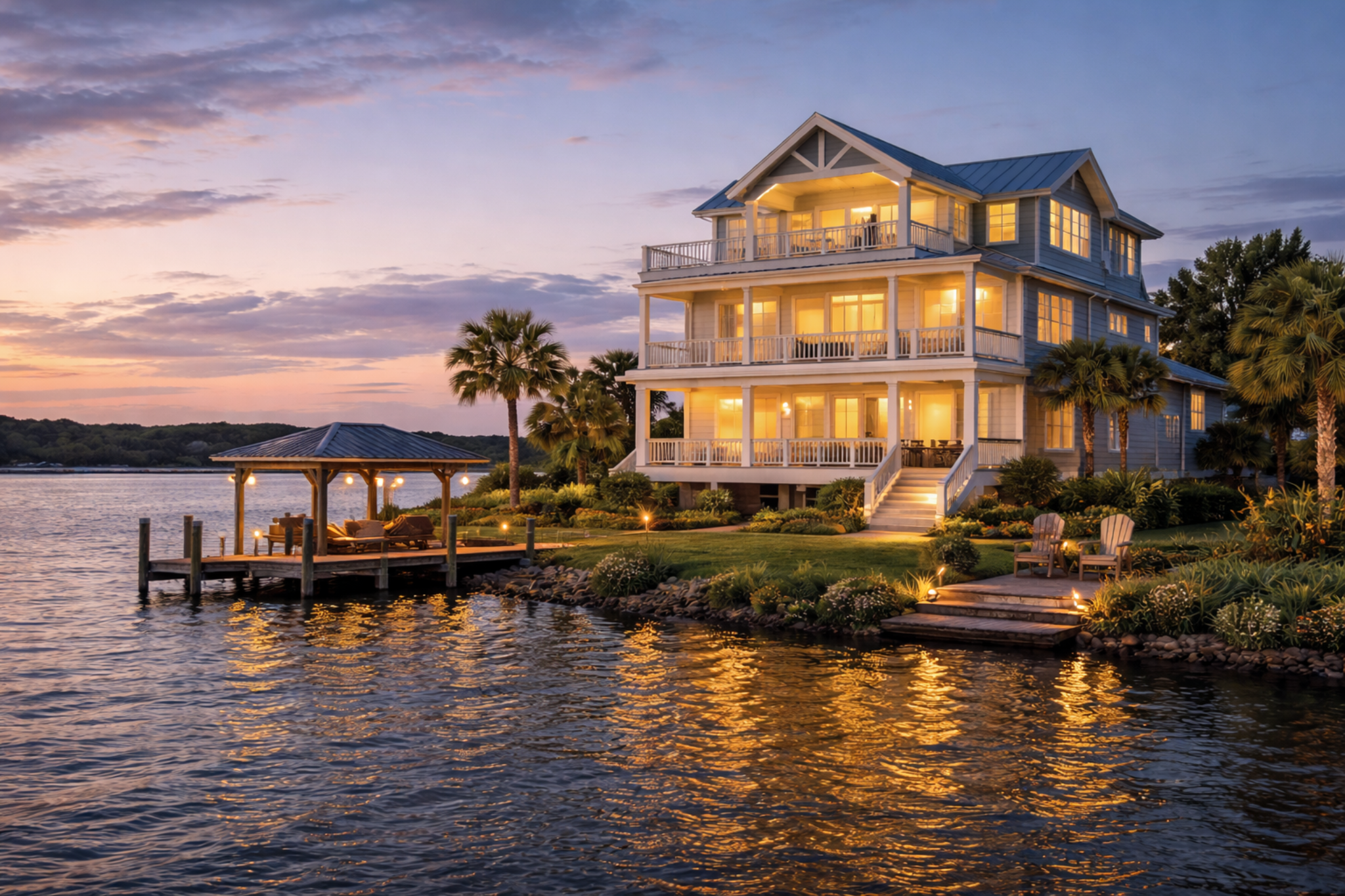
Building a coastal custom home is fundamentally different from building inland. Salt air, hurricane exposure, flood zones, evolving insurance requirements, and coastal lifestyle expectations all change the rules - especially heading into 2026.
This coastal home planning checklist is designed for homeowners, designers, and builders who want to make the right decisions early, before architectural plans are finalized and costly revisions begin.
Whether you’re planning a primary coastal residence or a luxury vacation home, this 2026 - ready checklist will help ensure your home is durable, efficient, insurable, and future-proof.
Building a coastal home in southeastern North Carolina comes with location-specific considerations that go beyond general coastal construction best practices.
From Brunswick County floodplain regulations to wind exposure along Wrightsville Beach, successful coastal home planning requires a deep understanding of local codes, environmental conditions, and insurance requirements.
This checklist is especially relevant for homeowners planning to build in:
Wilmington
Carolina Beach
Oak Isle
Greater Brunswick County coastal communities
Each of these areas presents unique challenges related to flood zones, wind loads, erosion, and elevation requirements that should be addressed before design begins.
Your flood zone classification directly affects:
Foundation design and elevation strategy
Finished floor height requirements
Flood insurance premiums
Long-term resale value and lender approval
Proper coastal home orientation can:
Reduce wind pressure on large openings
Protect outdoor living areas
Improve cross-ventilation and passive cooling
Designing for wind loads and hurricane paths early prevents expensive structural retrofits later.
Smart coastal site planning considers:
Setbacks beyond minimum code
Elevated structures where appropriate
Landscaping that stabilizes soil and manages runoff
Pro tip: Designing for future shoreline change protects both property value and insurability.
Flood zone classifications vary significantly across Brunswick County and New Hanover County, especially in waterfront and second-row coastal lots.
For example:
Oak Isle and Carolina Beach frequently require higher finished floor elevations due to storm surge exposure
Wrightsville Beach enforces strict zoning, setback, and elevation standards
Wilmington coastal areas often involve mixed AE and X flood zones that still impact insurance and foundation choices
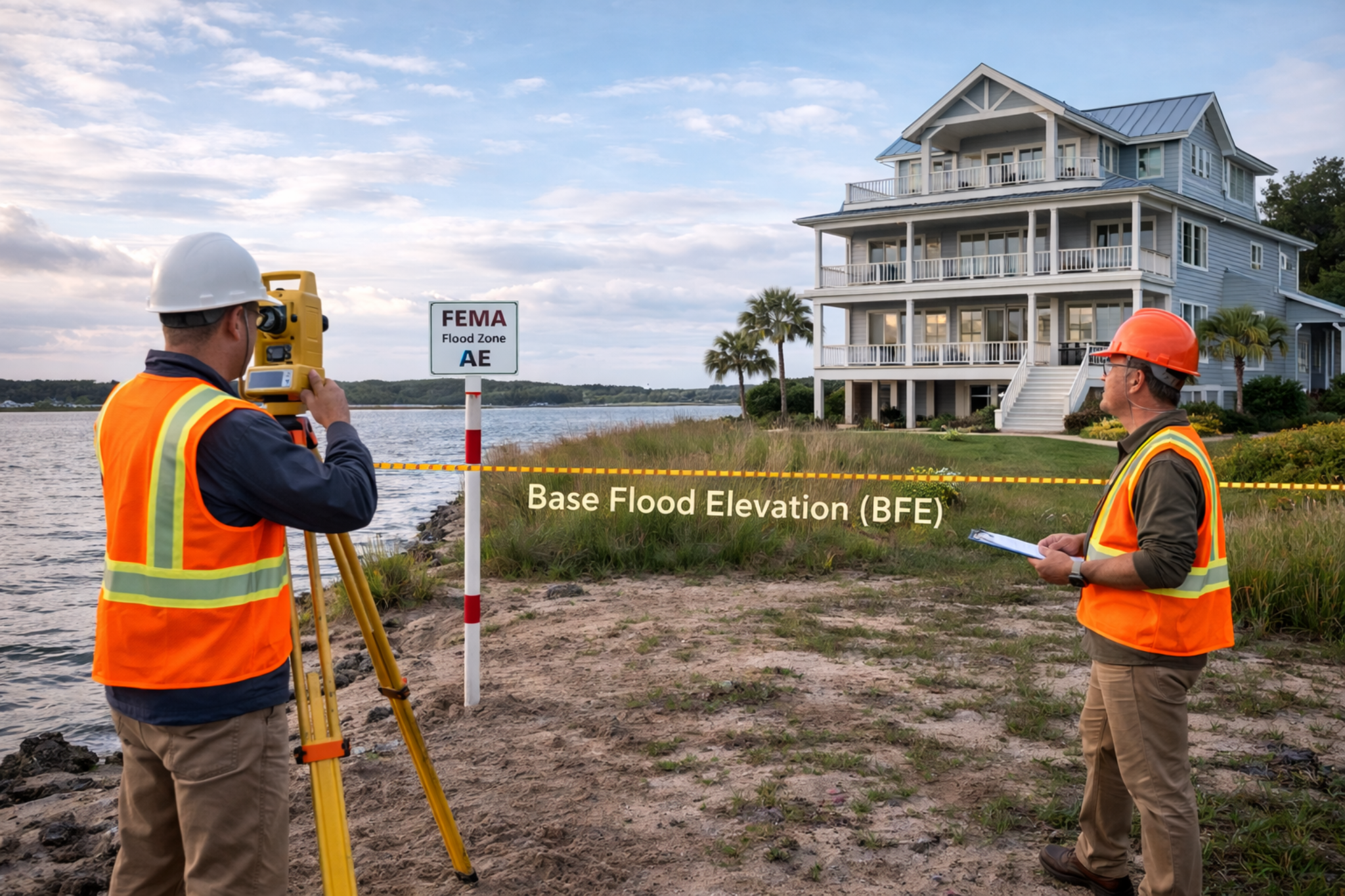
Local coastal home planning tip: Always verify Base Flood Elevation (BFE) using the most current FEMA maps and local amendments before finalizing foundation design.
Common coastal foundation types include:
Elevated pier foundations
Stem wall foundations
Pile-supported structures in high-risk flood zones
Your foundation choice impacts insurance, longevity, and rebuild costs.
Your construction documents should clearly show:
Continuous load paths
Hurricane ties and structural connectors
Roof-to-wall reinforcement
These are non-negotiable for coastal wind-resistant construction in 2026.
High-performance coastal homes allow water to:
Pass through enclosed areas when required by code
Drain quickly after storm events
Avoid moisture entrapment in wall assemblies
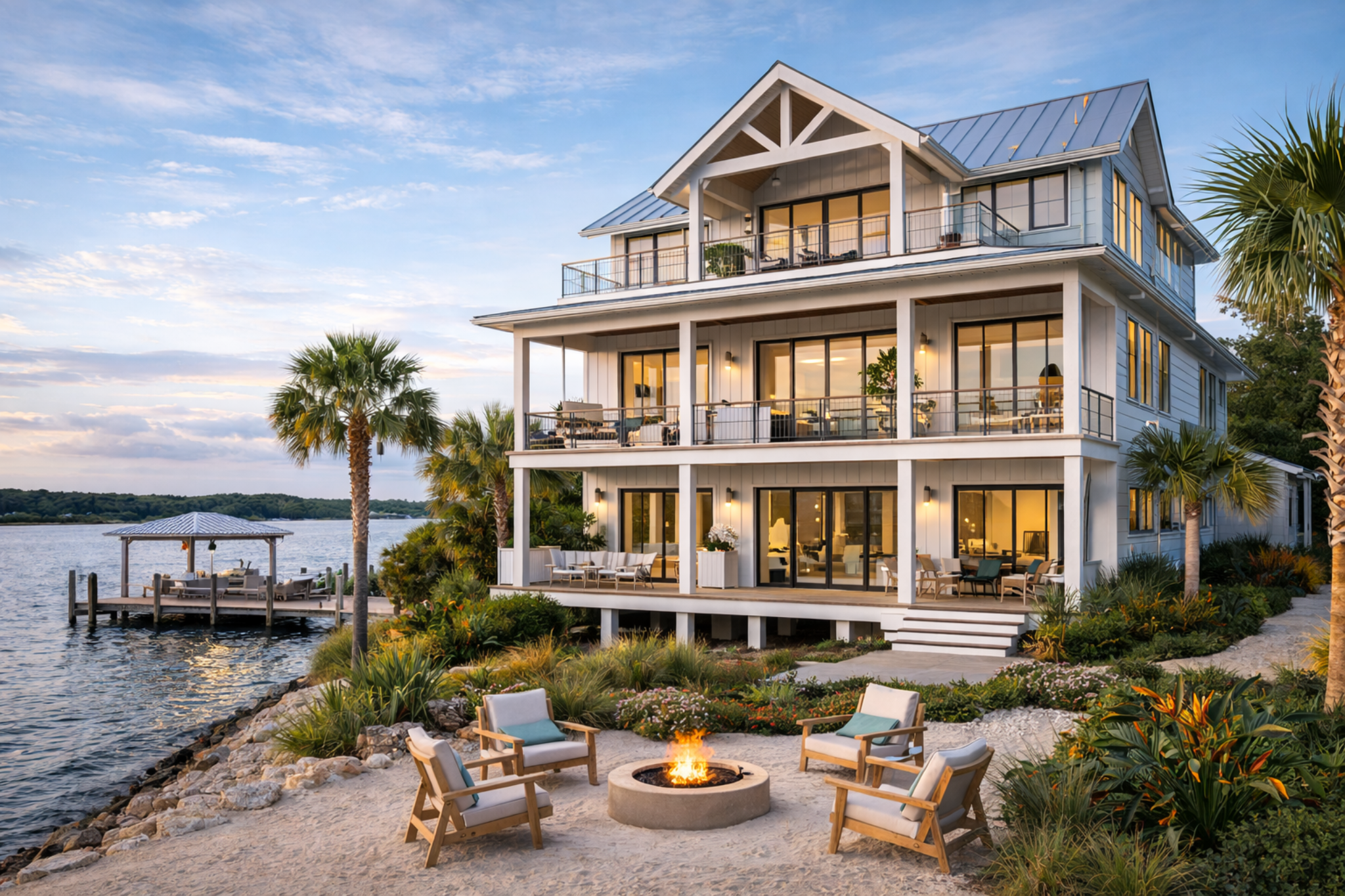
Modern coastal house plans typically feature:
Garage, storage, or flexible space at lower levels
Living areas positioned above BFE
Bedrooms designed for views, privacy, and airflow
Highly searched coastal layout features include:
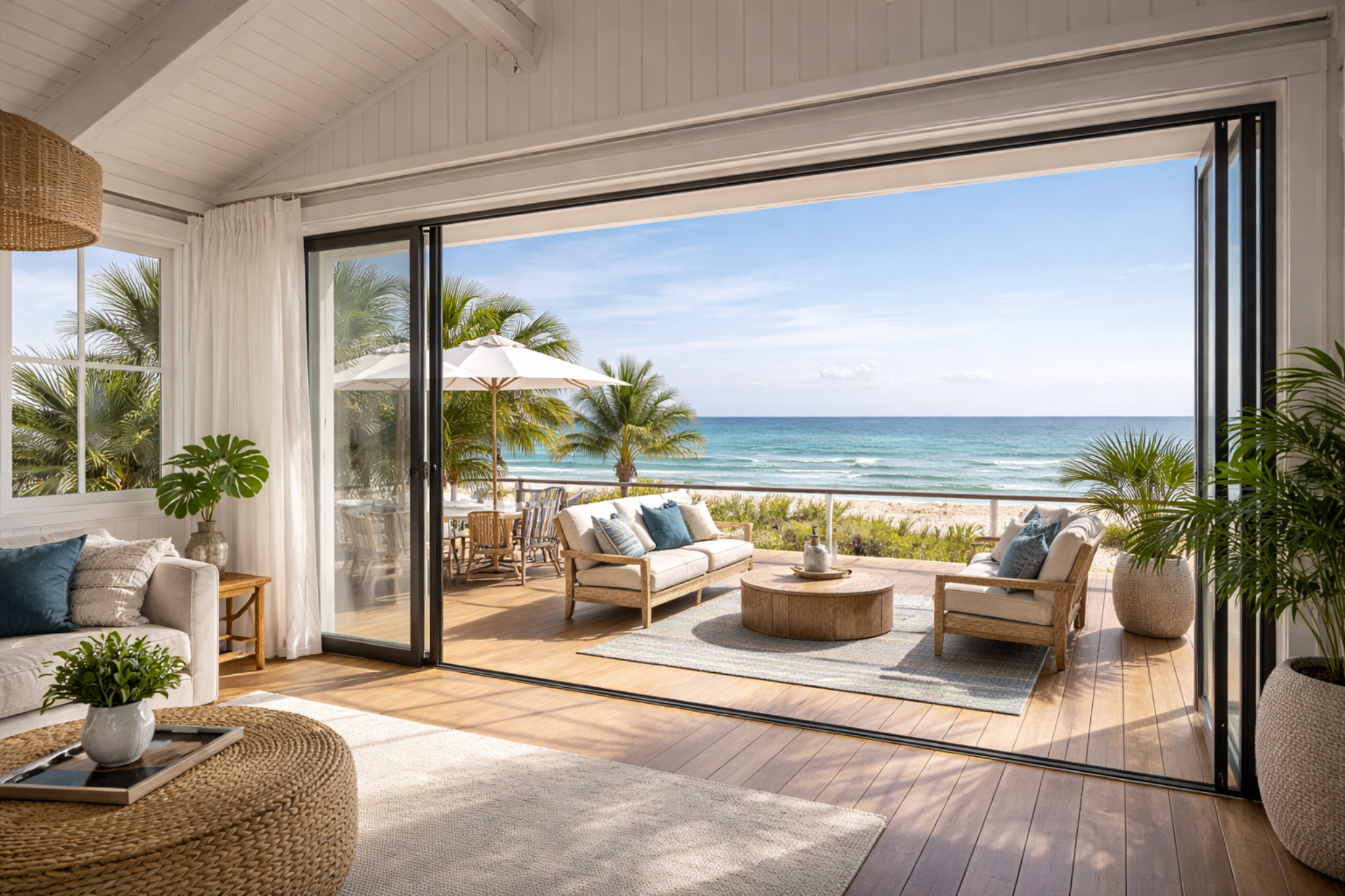
Large sliding or folding glass doors
Covered porches and outdoor living rooms
Wind-protected outdoor kitchens
Future-ready coastal homes include:
Guest suites that convert to offices
Bunk rooms for vacation flexibility
Bonus spaces designed for future conversion
Coastal homeowners in Wrightsville Beach and Wilmington often prioritize:
Elevated main living levels with expansive views
Open-concept living areas for entertaining
Seamless indoor–outdoor transitions to decks and porches
In vacation-driven markets like Oak Isle and Carolina Beach, flexible layouts with bunk rooms, lock-off suites, and owner storage are especially valuable.
A non-negotiable coastal home feature that delivers:
Enhanced storm protection
Improved insurance eligibility
Better sound and UV control
Architectural overhangs help:
Reduce solar heat gain
Protect siding and windows during coastal storms
Extend the lifespan of exterior materials by protecting the area below
Top-performing options include:
Fiber cement siding
Durable metal roofing
Composite or PVC trim
Coastal homeowners need room for:
Beach and water-sport equipment
Outdoor furniture storage
Storm preparation supplies
Key considerations for coastal wall assemblies:
Proper ventilation paths
Mold-resistant materials
Attention to drying potential
Best coastal flooring options:
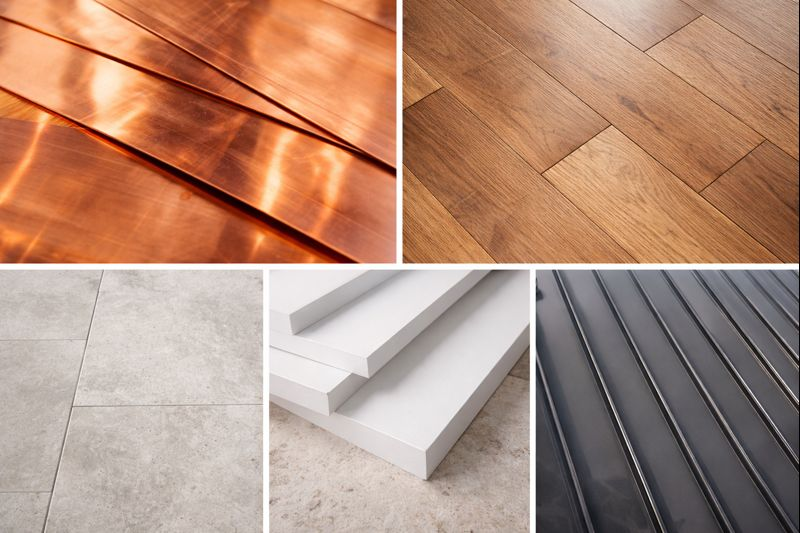
Porcelain or ceramic tile
Engineered hardwood
Polished concrete
Specify throughout the home:
Stainless steel fasteners
Copper flashing
Marine-rated exterior hardware
Salt exposure and humidity levels along the North Carolina coastline make material selection critical.
Top-performing exterior materials for this region include:
Fiber cement siding resistant to moisture and salt air
Standing-seam metal roofing rated for coastal wind zones
PVC trim and corrosion-resistant fasteners
These choices are especially important in Brunswick County coastal environments, where long-term durability directly impacts maintenance costs.
Coastal homes benefit from:
Spray foam or hybrid insulation
Tight, air-sealed envelopes
Improved humidity control
Zoning delivers:
Better temperature balance
Reduced energy costs
Improved comfort across floors
Plan now for:
Remote storm monitoring
Smart lighting and climate systems
Future solar or battery integration
Future buyers prioritize:
Compliance with all codes
Clear elevation certificates
Proven construction methods
Timeless coastal architecture consistently outperforms short-lived trends in resale value.
Well-documented plans, specs, and elevations add confidence for:
Buyers
Insurers
Lenders
Whether you’re building in Brunswick County, along the beaches of Oak Isle or Carolina Beach, or closer to Wilmington and Wrightsville Beach, early coastal planning decisions will define your home’s performance for decades.
This coastal custom home planning checklist is designed to help North Carolina coastal homeowners reduce risk, control costs, and build homes that meet local codes, insurance standards, and real-world coastal conditions.
The best coastal homes aren’t just beautiful - they’re strategically planned to withstand real-world coastal conditions for decades..